
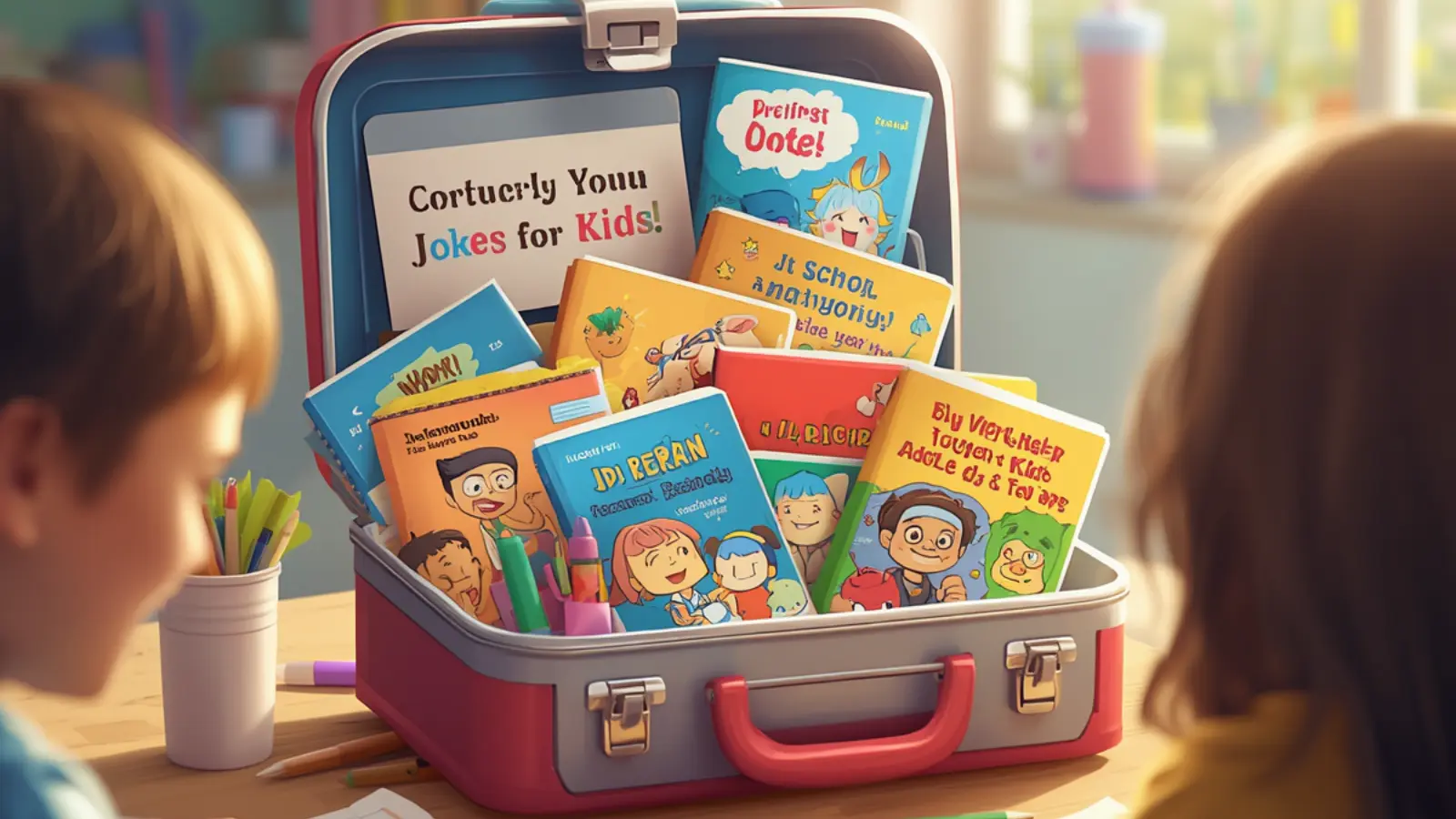
There is something quietly magical about opening a lunchbox and finding a tiny joke waiting inside.
It’s not just food it’s emotion, surprise, and connection packed into a small moment of the day.
A simple line like “Why did the sandwich go to school? Because it wanted to be well-bread!” can turn an ordinary afternoon into a memory a child carries home smiling.
In a fast-paced world where kids face academic pressure, digital distractions, and emotional overload, lunchbox jokes for kids are more than just cute notes.
They are psychological tools of happiness, bonding, and emotional development. Humor becomes a soft language of love spoken through paper notes, doodles, and playful punchlines.
This article explores how these tiny jokes influence emotional intelligence, classroom energy, friendships, confidence, and even long-term happiness patterns.
Let’s dive into the emotional science behind laughter packed inside a lunchbox.
1. lunchbox jokes for kids in Emotional Bonding Psychology Foundations

- 😊 A joke in a lunchbox creates instant emotional warmth between parent and child
- ❤️ It strengthens attachment through surprise positive reinforcement
- 🧠 The brain links humor with safety and emotional security
- 😄 Kids feel “remembered” when they find playful messages
- 💬 Shared laughter builds subconscious trust in relationships
- 🌈 Emotional distance shrinks through small daily humor rituals
- 🫶 Jokes act as silent “I care about you” messages
- 🎯 Positive humor improves emotional regulation in children
- 💞 Kids associate school with comfort instead of stress
- 😍 Humor increases oxytocin-driven bonding responses
- ✨ Surprise jokes create memory anchors in childhood
- 🔥 Emotional resilience grows through playful experiences
- 🌸 Parents become more emotionally approachable figures
- 💫 Humor becomes a daily emotional glue in family life
2. lunchbox jokes for kids in Classroom Attention and Learning Energy
- 📚 Funny lunchbox jokes improve classroom mood instantly
- 😆 Kids share jokes, increasing peer engagement
- 🧠 Humor boosts memory retention during lessons
- 🎓 Laughter reduces academic pressure naturally
- 💡 Funny notes encourage curiosity and participation
- 📝 Students recall lessons linked with humor better
- 😂 Jokes spread positivity in classroom groups
- 👩🏫 Teachers notice improved attention spans
- 🤝 Humor encourages collaborative learning behavior
- 🌟 Kids feel more confident expressing ideas
- 💬 Classroom anxiety reduces significantly
- 😄 Playful mindset enhances problem-solving skills
- 📖 Learning becomes emotionally enjoyable
- 💞 Humor transforms classrooms into safe spaces
3. lunchbox jokes for kids in Friendship Circle Formation

- 🤗 Kids bond faster through shared lunchbox jokes
- 😂 Humor creates inside jokes between friends
- 💬 Funny notes become social conversation starters
- 🌈 Shared laughter reduces childhood social stress
- 🧠 Humor helps resolve small misunderstandings
- 💞 Kids feel emotionally closer after laughing together
- 🎉 Joke-sharing builds group identity
- 😆 Funny lunches make school breaks exciting
- 🔥 Humor encourages inclusive friendships
- 🫶 Teasing with jokes strengthens social bonds
- 🌸 Kids feel more relaxed in friend groups
- 🎯 Humor improves communication confidence
- 💫 Jokes eliminate awkward social silence
- ❤️ Funny kids become unforgettable in groups
4. lunchbox jokes for kids in Early Romantic Awareness Psychology
- 💘 Humor builds early attraction in social settings
- 😍 Funny kids are often seen as more likable
- ❤️ Laughter creates emotional closeness
- 🌹 Jokes reduce awkwardness in early crush moments
- 💬 Humor becomes playful flirting language
- 🔥 Funny personalities feel more emotionally safe
- 🧠 Kids associate humor with intelligence
- 💞 Shared jokes create subtle bonding signals
- 😄 Laughter increases comfort around peers
- 🌈 Humor builds emotional curiosity
- 🎯 Funny interactions leave stronger impressions
- 🫶 Playfulness enhances social appeal
- 💫 Humor creates positive emotional association
- ❤️ “Funny = attractive” perception begins early
5. lunchbox jokes for kids in Stress Relief and Emotional Balance Science
- 😌 Humor lowers stress hormones naturally
- 🧠 Laughter calms overactive emotional responses
- 😂 Jokes improve mood within seconds
- 🌈 Kids feel less school pressure
- 💬 Humor provides emotional escape during tough days
- 💞 Laughter increases mental resilience
- 🫶 Funny notes reduce exam anxiety
- 🎯 Humor shifts focus away from fear
- 🔥 Emotional recovery becomes faster
- 🌟 Kids feel more optimistic daily
- 😄 Dopamine release improves happiness
- 💡 Humor enhances emotional clarity
- ❤️ Joyful jokes act like mini therapy
- 💫 Lunchbox humor supports mental wellness
6. lunchbox jokes for kids in Parent-Child Communication Patterns
- 👨👩👧 Humor improves daily communication flow
- 💬 Kids respond more openly to playful parents
- 😂 Jokes reduce parenting tension naturally
- 🌈 Communication becomes less formal and more warm
- 🧠 Humor builds trust between parent and child
- 💞 Kids feel emotionally understood
- 🫶 Funny notes encourage dialogue at home
- 🎯 Jokes open conversations about feelings
- 🔥 Parents appear more relatable
- 🌟 Humor strengthens emotional availability
- 😄 Kids share school experiences more freely
- 💡 Playfulness improves listening behavior
- ❤️ Emotional bonding deepens daily
- 💫 Humor turns parenting into connection
7. lunchbox jokes for kids in Creativity and Imagination Development
- 🎨 Humor sparks imaginative thinking
- 🧠 Kids develop creative wordplay skills
- 😆 Joke interpretation boosts cognitive flexibility
- 💬 Funny notes inspire storytelling habits
- 🌈 Humor encourages abstract thinking
- 💞 Kids invent their own jokes
- 🫶 Creativity grows through playful language
- 🎯 Humor improves narrative thinking
- 🔥 Imagination becomes more active
- 🌟 Kids explore multiple meanings
- 😄 Creative humor builds problem-solving skills
- 💡 Joke writing enhances literacy
- ❤️ Humor stimulates artistic expression
- 💫 Lunchbox jokes unlock creative potential
8. lunchbox jokes for kids in Social Confidence Building Blocks
- 😄 Humor boosts self-confidence in children
- 💬 Kids feel more socially accepted
- 🧠 Funny kids are less socially anxious
- 🌈 Humor improves peer interaction skills
- 💞 Kids gain courage in group settings
- 🫶 Joke sharing builds leadership qualities
- 🎯 Humor encourages speaking participation
- 🔥 Confidence grows through laughter feedback
- 🌟 Funny kids attract positive attention
- 😂 Humor reduces fear of judgment
- 💡 Social risks feel safer
- ❤️ Kids express themselves more freely
- 💫 Confidence grows through emotional reward
- 🎉 Humor becomes social empowerment
9. lunchbox jokes for kids in Memory Retention and Learning Psychology
- 🧠 Funny content is easier to remember
- 😂 Humor creates strong memory anchors
- 📚 Kids recall jokes tied to lessons
- 🌈 Emotional learning improves retention
- 💬 Humor enhances cognitive encoding
- 💞 Laughter strengthens memory pathways
- 🫶 Funny notes increase recall speed
- 🎯 Jokes improve focus during study
- 🔥 Humor boosts long-term memory storage
- 🌟 Emotional engagement enhances learning
- 😄 Funny examples make subjects memorable
- 💡 Humor reduces cognitive overload
- ❤️ Learning becomes enjoyable experience
- 💫 Lunchbox jokes improve academic recall
10. lunchbox jokes for kids in Digital Age Emotional Balance
- 📱 Humor reduces screen addiction stress
- 😂 Physical jokes feel more personal than digital ones
- 💬 Kids disconnect emotionally from screens
- 🌈 Lunchbox notes create real-world joy
- 🧠 Humor balances digital overload
- 💞 Kids value offline emotional connection
- 🫶 Jokes reduce loneliness from tech use
- 🎯 Humor brings real human warmth
- 🔥 Physical notes feel more meaningful
- 🌟 Kids anticipate lunchbox surprises
- 😄 Offline humor improves emotional grounding
- 💡 Reduces dependency on digital validation
- ❤️ Builds tangible emotional memories
- 💫 Restores real-world happiness cycles
11. lunchbox jokes for kids in Personality Shaping Foundations
- 🧠 Humor builds positive personality traits
- 😄 Kids become more optimistic
- 💬 Joke lovers appear more approachable
- 🌈 Humor enhances emotional intelligence
- 💞 Playful kids adapt socially faster
- 🫶 Confidence grows through laughter exposure
- 🎯 Humor improves communication style
- 🔥 Funny kids handle challenges better
- 🌟 Personality becomes more magnetic
- 😂 Humor reduces fear of rejection
- 💡 Kids develop emotional flexibility
- ❤️ Laughter strengthens identity expression
- 💫 Humor supports resilience building
- 🎉 Personality grows through joy habits
12. lunchbox jokes for kids in Long-Term Happiness Patterns
- 🌞 Daily humor builds lifelong positivity
- 😂 Small jokes create big emotional impact
- 🧠 Kids develop happiness conditioning
- 🌈 Humor becomes emotional habit
- 💬 Positive memories shape adulthood outlook
- 💞 Laughter improves life satisfaction
- 🫶 Humor reduces negativity bias
- 🎯 Jokes create joyful associations
- 🔥 Emotional well-being improves steadily
- 🌟 Humor strengthens gratitude mindset
- 😄 Kids grow into optimistic adults
- 💡 Joyful habits increase resilience
- ❤️ Happiness becomes natural state
- 💫 Lunchbox jokes shape lifelong joy
13. lunchbox jokes for kids in Cultural Storytelling Traditions
- 🌍 Humor reflects cultural identity
- 😂 Every culture has unique joke styles
- 🧠 Kids learn values through humor
- 💬 Lunchbox jokes pass traditions creatively
- 🌈 Humor connects generations
- 💞 Shared laughter builds cultural unity
- 🎯 Jokes preserve storytelling heritage
- 🔥 Humor adapts across time
- 🫶 Kids learn social lessons playfully
- 🌟 Comedy reflects societal values
- 😄 Humor bridges generational gaps
- 💡 Stories become more engaging
- ❤️ Cultural identity strengthens
- 💫 Humor connects past and present
14. lunchbox jokes for kids in Universal Human Happiness Language
- 🌍 Laughter is understood worldwide
- 😂 Humor crosses language barriers
- 🧠 Kids connect beyond words
- 💬 Jokes unify diverse backgrounds
- 🌈 Humor builds global empathy
- 💞 Shared laughter promotes peace
- 🫶 Kids feel connected universally
- 🎯 Humor creates emotional unity
- 🔥 Comedy reduces cultural distance
- 🌟 Funny moments spread positivity
- 😄 Humor builds human understanding
- 💡 Jokes create emotional harmony
- ❤️ Laughter connects humanity
- 💫 Lunchbox jokes are universal joy
FAQ: lunchbox jokes for kids and Emotional Psychology of Humor
1. Why are lunchbox jokes for kids emotionally important?
Lunchbox jokes are important because they create daily emotional connection between parent and child. They act as small surprises that trigger joy, reduce stress, and build a sense of being cared for. Over time, these tiny moments strengthen emotional security, improve mood regulation, and help children associate learning and school with positivity instead of pressure.
2. How do lunchbox jokes for kids improve learning ability?
Humor improves learning by increasing attention, memory retention, and engagement. When children associate information with laughter, their brains store it more effectively. Lunchbox jokes also reduce academic anxiety, making kids more open to participation and curiosity, which naturally enhances classroom performance and cognitive growth.
3. Can lunchbox jokes for kids reduce school stress?
Yes, they can significantly reduce stress. Laughter triggers dopamine and lowers cortisol levels, which helps children feel calmer and more relaxed. A simple joke during lunch can reset emotional tension built during school hours, improving overall mental balance and emotional resilience.
4. Do lunchbox jokes for kids improve parent-child relationships?
Absolutely. These jokes act as emotional bridges. They show care, attention, and playfulness, which makes communication more open and trusting. Children feel emotionally seen and valued, which strengthens attachment and improves long-term relationship quality with parents.
5. Why do kids love receiving lunchbox jokes so much?
Kids love surprises, and humor creates positive emotional spikes. A joke in a lunchbox breaks routine, adds excitement, and makes them feel special. It also gives them something fun to share with friends, which enhances their social experience and confidence.
6. How do lunchbox jokes for kids affect social skills?
They improve social skills by encouraging sharing, communication, and storytelling. Kids who enjoy humor tend to connect faster with peers, handle social situations more comfortably, and develop stronger friendship bonds through shared laughter experiences.
7. Can lunchbox jokes help shy children become more confident?
Yes, humor helps reduce social fear and hesitation. Receiving and sharing jokes gives shy children a safe way to interact with others. Over time, this builds confidence, improves expression, and helps them feel more comfortable in group settings.
8. Are lunchbox jokes for kids useful for emotional development?
They are extremely useful for emotional development. Humor teaches children how to manage feelings, cope with stress, and develop optimism. It also improves emotional intelligence by helping them understand tone, timing, and social context in a playful way.
Conclusion
In the quiet corners of a school day, between lessons and lunch breaks, something powerful can happen a child opens a lunchbox and smiles.
That small moment is not small at all. It is emotional science in action, where love, psychology, and joy meet through laughter.
lunchbox jokes for kids are more than playful notes; they are emotional investments in happiness, confidence, and lifelong resilience.
They shape how children feel, learn, connect, and grow. And in a world that often feels too serious, these tiny jokes remind us that joy still fits perfectly inside a lunchbox.

Lucas Hayes delivers smart comedy articles and funny conversational content for readers of laughliy.com.