

From the very first glance, the phrase “beginning of a joke NYT” feels simple almost playful.
But beneath it lies a fascinating world of linguistic trickery, crossword culture, cognitive psychology, and the timeless human love for humor.
The New York Times crossword has long been more than just a puzzle it is a mental playground where language bends, twists, and surprises us.
When solvers encounter clues related to the beginning of a joke NYT, they aren’t just filling boxes they are decoding intention, humor structure, and layered meaning.
Why do we laugh before the punchline? Why does the setup matter more than we think? And why does the NYT love this style of clue so much?
This article dives deep into that universe blending SEO intelligence, semantic meaning, and human storytelling to fully explore the emotional and cognitive journey behind joke beginnings, crossword clues, and linguistic creativity.
Beginning of a Joke NYT and the Psychology Behind First Impressions in Humor
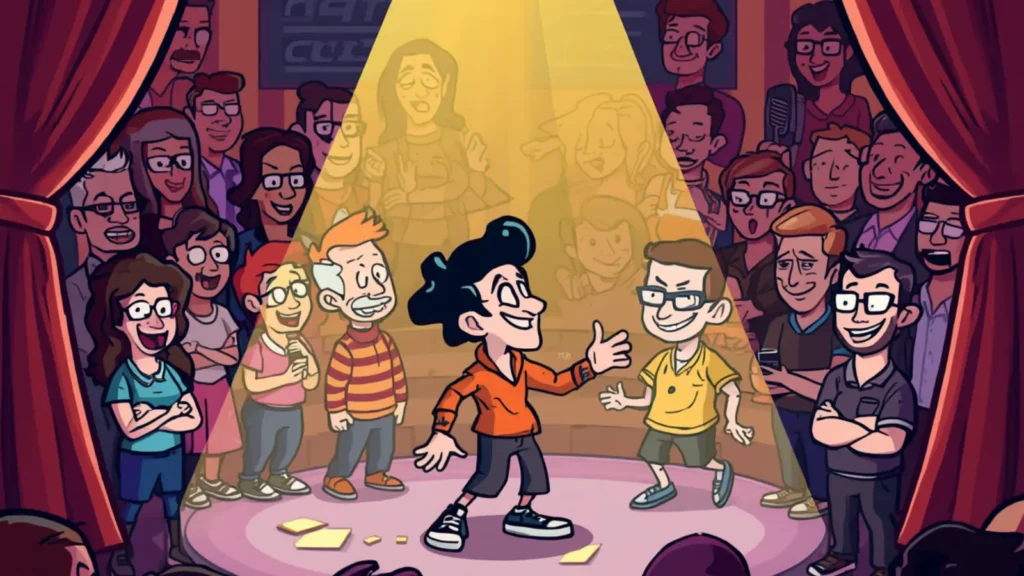
- 😄 The “beginning” of a joke sets emotional expectations in the brain instantly.
- 🧠 Cognitive psychology shows anticipation activates dopamine even before the punchline.
- 🎭 NYT clues often rely on misdirection from the very first word.
- 📚 A joke’s setup frames the entire meaning structure in humor theory.
- 🔍 Readers unconsciously predict outcomes based on early linguistic cues.
- 😂 The brain enjoys pattern recognition when setups feel familiar yet incomplete.
- 🎯 In NYT puzzles, “beginning of a joke” often signals wordplay manipulation.
- 💡 First impressions in humor shape how funny the punchline will feel.
- 🧩 Crossword solvers rely heavily on semantic priming for such clues.
- 🎤 Joke openings mimic storytelling hooks used in viral content.
- 🧠 The brain stores setup information longer than punchlines.
- 📖 NYT editors use ambiguity to challenge lateral thinking skills.
- 🔄 Humor often depends more on setup timing than delivery.
- ✨ The “beginning” is where curiosity is intentionally triggered.
Beginning of a Joke NYT and Its Role in Crossword Wordplay Mechanics
- 🧩 Crossword clues often disguise literal meanings as figurative hints.
- 🔤 “Beginning” usually signals initial letters or prefixes in answers.
- 🧠 Wordplay encourages lateral thinking over direct interpretation.
- 🎯 NYT puzzles frequently hide abbreviations in humor clues.
- 📌 Solvers must shift between literal and conceptual thinking.
- 🔍 The phrase may indicate “setup phrase” in comedic structure.
- 🎭 Word manipulation is core to NYT crossword design philosophy.
- 🧠 Semantic ambiguity increases puzzle difficulty intentionally.
- ✏️ Many answers involve splitting words or phonetic tricks.
- 📖 The “joke” element suggests humor-related phrasing or idioms.
- 🧠 Cognitive flexibility is tested through misleading clues.
- 🔄 Beginners often misread “beginning” as temporal instead of structural.
- 🎲 Word association plays a key role in solving accuracy.
- 💡 NYT puzzles reward creative interpretation over rigid logic.
Beginning of a Joke NYT and Emotional Triggers in Language Design
- ❤️ Emotional engagement starts from the very first word of a joke.
- 😮 Surprise is the primary emotional trigger in humor structure.
- 🧠 The brain reacts faster to incomplete narratives.
- 🎭 NYT clues often exploit emotional anticipation gaps.
- 💬 Language framing influences perceived funniness significantly.
- 🔍 Emotional curiosity drives puzzle-solving persistence.
- 😄 Positive emotional tension builds from setup ambiguity.
- 🧩 Solvers feel satisfaction when emotional prediction resolves.
- 🎯 Humor relies on controlled expectation violation.
- 🧠 The “beginning” activates narrative prediction circuits.
- 💡 Emotional contrast enhances punchline impact.
- 📚 Crossword humor is subtle but psychologically powerful.
- 🔄 Anticipation loops keep solvers engaged longer.
- ✨ Emotional payoff is central to NYT clue design.
Beginning of a Joke NYT and Linguistic Puzzle Engineering Secrets
- 🔤 Linguistic engineering hides answers inside natural language.
- 🧠 Syntax manipulation is key in NYT crossword construction.
- 🎭 Joke clues often involve double meanings or puns.
- 📌 “Beginning” may indicate first letters or word roots.
- 🔍 Structural ambiguity increases cognitive load strategically.
- 🧩 Editors design clues to mislead surface interpretation.
- 💡 Language engineering balances difficulty and fairness.
- 🎯 Word segmentation tricks are commonly used.
- 🧠 Phonetic clues appear frequently in humor-based puzzles.
- 📚 Crossword grammar differs from standard grammar rules.
- 🔄 Semantic layering adds multiple interpretation levels.
- 🎲 Hidden meanings reward flexible thinking.
- 🧠 Linguistic traps are intentional, not accidental.
- ✨ Puzzle engineering blends art and logic seamlessly.
Beginning of a Joke NYT and Cultural Evolution of Humor in Crosswords
- 🌍 Humor in crosswords has evolved across decades.
- 📚 NYT puzzles reflect changing cultural references.
- 🎭 Joke structures adapt to modern linguistic trends.
- 🧠 Cultural literacy helps decode modern clues.
- 🔍 Older jokes often rely on classic idioms.
- 💡 New puzzles include internet-era humor references.
- 🎯 “Beginning” clues often reflect storytelling culture.
- 🧩 Humor evolves with language shifts over time.
- 📖 Crossword humor mirrors societal communication styles.
- 😄 Pop culture heavily influences modern clue design.
- 🧠 Cultural context improves solving accuracy.
- 🔄 Humor evolves from literal to abstract forms.
- 🎭 Crosswords preserve linguistic history through humor.
- ✨ NYT puzzles act as cultural time capsules.
Beginning of a Joke NYT and Cognitive Bias in Puzzle Solving
- 🧠 Confirmation bias affects how solvers interpret clues.
- 🔍 People often assume obvious meanings first.
- 🎭 Misleading structure triggers cognitive misdirection.
- 🧩 “Beginning” cues may be overgeneralized incorrectly.
- 💡 Anchoring bias influences first interpretation.
- 🎯 Solvers struggle to shift mental frameworks.
- 🧠 Pattern recognition sometimes leads to wrong answers.
- 🔄 Cognitive flexibility improves solving success.
- 📚 Experience reduces bias over time.
- 😮 Surprise breaks mental assumptions effectively.
- 🎭 Puzzle designers exploit predictable thinking patterns.
- 🔍 Bias awareness improves accuracy significantly.
- 🧠 Mental reset is key in complex clues.
- ✨ Awareness of bias enhances crossword mastery.
Beginning of a Joke NYT and the Art of Setup-Driven Storytelling
- 📖 Every joke begins with narrative framing.
- 🎭 Setup determines emotional direction of humor.
- 🧠 Storytelling activates memory and imagination.
- 💡 NYT clues mimic mini storytelling structures.
- 🔍 Setup builds curiosity before resolution.
- 🎯 Narrative tension is essential in humor design.
- 🧩 Crossword clues act like compressed stories.
- 😄 Readers anticipate payoff through context clues.
- 🧠 Emotional investment begins at setup stage.
- 📚 Story arcs exist even in single-line jokes.
- 🎭 The “beginning” is narrative ignition.
- 🔄 Setup controls timing of humor release.
- 💡 Strong setups improve punchline impact.
- ✨ Storytelling logic enhances puzzle enjoyment.
Beginning of a Joke NYT and Semantic Layering in Modern Language Games
- 🔤 Words carry multiple semantic layers simultaneously.
- 🧠 Meaning shifts based on context cues.
- 🎭 NYT puzzles exploit layered interpretations.
- 💡 “Beginning” may indicate prefix, tone, or setup.
- 🔍 Semantic ambiguity increases engagement.
- 🧩 Language games rely on multi-meaning structures.
- 🎯 Solvers decode hidden linguistic layers.
- 📚 Context determines correct interpretation.
- 🧠 Words function like flexible meaning units.
- 🔄 Layered meaning enhances puzzle depth.
- 😄 Humor emerges from unexpected interpretations.
- 🎭 Semantic overlap creates confusion and delight.
- 💡 Skilled solvers navigate meaning layers efficiently.
- ✨ Language games thrive on ambiguity.
Beginning of a Joke NYT and the Neuroscience of Humor Anticipation
- 🧠 Brain reward systems activate during anticipation.
- 🎯 Dopamine spikes before resolution of jokes.
- 😄 Uncertainty increases engagement levels.
- 🔍 Prediction errors create humor responses.
- 🎭 Setup builds neural tension loops.
- 💡 NYT clues stimulate curiosity pathways.
- 🧩 Cognitive closure produces satisfaction.
- 🧠 Humor processing involves multiple brain regions.
- 🔄 Expectation mismatch triggers laughter.
- 📚 The brain prefers resolved ambiguity.
- 🎯 Anticipation is more powerful than delivery.
- 😮 Surprise enhances memory retention.
- 🧠 Puzzle solving mimics reward cycles.
- ✨ Humor is a neurological feedback loop.
Beginning of a Joke NYT and Digital Age Puzzle Engagement Trends
- 📱 Digital platforms increased crossword accessibility.
- 🧠 Online solvers use instant hint systems.
- 🎯 Engagement metrics shape puzzle design.
- 🔍 Modern users prefer interactive solving.
- 💡 Mobile apps enhance daily puzzle habits.
- 🎭 Social sharing boosts crossword popularity.
- 🧩 “Beginning of a joke” clues trend widely online.
- 😄 Community solving improves learning speed.
- 📚 Digital feedback loops refine puzzle difficulty.
- 🧠 Gamification increases user retention.
- 🔄 Adaptive difficulty keeps users engaged.
- 🎯 Analytics influence clue creativity.
- 📱 Mobile-first design changes solving behavior.
- ✨ Digital era reshapes humor consumption.
Beginning of a Joke NYT and Emotional Intelligence in Solving Clues
- ❤️ Emotional intelligence improves interpretation accuracy.
- 🧠 Empathy helps understand humor intent.
- 🎭 Tone recognition is key in wordplay.
- 💡 Emotional awareness reduces misinterpretation.
- 🔍 Solvers detect subtle linguistic cues better.
- 😄 Humor comprehension requires emotional sensitivity.
- 🎯 Context reading enhances solving success.
- 🧩 Emotional reasoning supports pattern recognition.
- 🧠 EQ complements logical thinking.
- 📚 Social awareness improves cultural clue decoding.
- 🎭 Emotional nuance matters in joke structure.
- 🔄 Balanced thinking improves accuracy.
- 💡 Emotion-driven insight aids puzzle intuition.
- ✨ EQ transforms solving into storytelling.
Beginning of a Joke NYT and Creative Thinking Expansion Techniques
- 💡 Creativity is essential for solving abstract clues.
- 🧠 Divergent thinking expands possible answers.
- 🎭 Word association sparks creative insights.
- 🔍 Breaking assumptions improves discovery.
- 🧩 Flexible thinking solves complex puzzles faster.
- 🎯 “Beginning” clues require mental reframing.
- 😄 Humor boosts creative cognition.
- 📚 Exposure to language variety enhances intuition.
- 🔄 Switching perspectives unlocks hidden meanings.
- 🧠 Brainstorming multiple interpretations helps accuracy.
- 💡 Creative elasticity improves puzzle mastery.
- 🎭 Imagination drives linguistic decoding.
- 🔍 Non-linear thinking uncovers solutions.
- ✨ Creativity transforms confusion into clarity.
Beginning of a Joke NYT and Why It Captivates Global Puzzle Lovers
- 🌍 Crossword culture spans across global audiences.
- 🧠 Universal humor patterns connect cultures.
- 🎭 Language puzzles transcend linguistic barriers.
- 💡 Shared curiosity drives engagement worldwide.
- 🔍 “Beginning of a joke” appeals universally.
- 😄 Humor is a global cognitive language.
- 🎯 NYT puzzles build international communities.
- 🧩 Solving becomes a social experience.
- 📚 Cultural exchange enriches understanding.
- 🧠 Cognitive challenge attracts all age groups.
- 🔄 Global players share solving strategies.
- 🎭 Humor unites diverse thinkers.
- 💡 Language play is universally addictive.
- ✨ Crossword solving becomes global storytelling.
Beginning of a Joke NYT and Mastering Advanced Solving Strategies
- 🧠 Start by identifying wordplay signals.
- 🔍 Look for hidden meanings in phrasing.
- 🎭 Break clue into structural components.
- 💡 Consider alternative interpretations first.
- 🧩 Test prefix and suffix possibilities.
- 🎯 Eliminate literal-only assumptions.
- 😄 Use humor context as guidance.
- 📚 Cross-reference with puzzle theme.
- 🔄 Revisit clue after filling nearby answers.
- 🧠 Train recognition of common trap patterns.
- 💡 Use intuition alongside logic.
- 🎭 Think like the puzzle creator.
- 🔍 Practice improves decoding speed.
- ✨ Mastery comes from pattern familiarity.
FAQ: Beginning of a Joke NYT
1. What does “beginning of a joke NYT” usually mean in crossword puzzles?
It typically refers to the setup portion of a joke or the first part of a wordplay answer. In NYT crosswords, it often signals prefixes, initial words, or the framing line that leads into humor. The clue encourages solvers to think beyond literal meaning and focus on structure, tone, or linguistic manipulation rather than just straightforward definitions.
2. Why is the “beginning of a joke” a common NYT crossword clue style?
Because it blends humor, ambiguity, and cognitive challenge. The NYT crossword is known for clever misdirection, and joke structures naturally allow for wordplay. The “beginning” element adds another layer of interpretation, making solvers analyze both language structure and comedic timing, which increases engagement and mental stimulation.
3. How do solvers decode “beginning of a joke NYT” clues effectively?
Experienced solvers look for prefixes, abbreviations, or setup phrases. They avoid literal interpretation and instead break down the clue into linguistic components. Understanding common crossword patterns and humor structures also helps significantly. Practice and familiarity with NYT-style clues improve accuracy over time.
4. Is humor important in NYT crossword puzzle design?
Yes, humor plays a major role. Many clues rely on puns, misdirection, and playful phrasing. Humor makes the puzzle more engaging and memorable, while also increasing cognitive challenge. The “beginning of a joke” type clue is a perfect example of how humor and language structure intersect in crossword design.
5. What psychological effect does joke setup have on the brain?
The setup of a joke creates anticipation and activates the brain’s reward system. It builds curiosity and expectation, releasing dopamine as the brain tries to predict the outcome. This is why even before the punchline, people feel engaged and mentally stimulated by the structure of a joke.
6. Why do people often struggle with “beginning” clues in NYT puzzles?
Because “beginning” can be misleading. It might refer to the first letters of words, prefixes, or even conceptual beginnings in storytelling. Many solvers initially interpret it literally, which leads to confusion. Shifting to abstract and structural thinking is key to solving these clues effectively.
7. Can beginners solve “beginning of a joke NYT” clues easily?
Beginners may find them challenging at first due to layered meanings. However, with practice, pattern recognition improves. Learning common wordplay tricks and understanding how NYT structures clues can make these puzzles much easier and even enjoyable over time.
8. What skills improve performance in solving such crossword clues?
Key skills include vocabulary strength, lateral thinking, emotional intelligence, pattern recognition, and familiarity with wordplay. Creative thinking and flexibility in interpretation are especially important for decoding ambiguous clues like “beginning of a joke NYT.”
Conclusion: The Hidden Magic Behind Beginning of a Joke NYT
The phrase “beginning of a joke NYT” is far more than a crossword clue it is a doorway into the psychology of humor, the architecture of language, and the art of human curiosity.
Every time solvers encounter it, they are not just solving a puzzle; they are decoding intention, emotion, and linguistic creativity.
At its core, the “beginning” is where everything starts anticipation, meaning, and emotional engagement.
And that is exactly why it remains one of the most fascinating elements in the world of NYT crossword puzzles.

A fun and energetic writer passionate about modern comedy and humorous online storytelling.